Georgia’s leadership committee law lives on despite legal challenges.
Unlike Democrats, Georgia Republicans campaign separately in final stretch.
House Democrats condemn Donald Trump’s latest effort to oust Lisa Cook.
Loyalty tests
The exterior door of the Georgia Supreme Court, seen here in June. (Jason Getz/AJC)
For years, a battle has simmered among the Georgia GOP over a simple question: Who gets to decide who is Republican enough to run as a Republican?
Far-right groups like the Georgia Republican Assembly have pushed to give party insiders the power to block candidates they deem insufficiently conservative.
And at last year’s state GOP convention, delegates even passed a resolution to prevent Secretary of State Brad Raffensperger from qualifying as a Republican, a move leaders refused to enforce.
On Tuesday, the Georgia Supreme Court waded into the fight with a clear message: Local party leaders can’t impose their own loyalty tests to decide who gets to run in GOP primaries.
The unanimous ruling stems from a 2024 showdown in Catoosa County, where GOP officials refused to let four county commission candidates qualify as Republicans unless they won approval from party insiders.
A local judge eventually ordered that the candidates be allowed to qualify despite the party’s resistance, and three of the four went on to win election.
Party leaders argued their screening process, which included interviews and a secret ballot, was needed to ensure candidates upheld the GOP’s values.
But in a unanimous decision, the justices ruled that county parties cannot impose their own requirements beyond state law and statewide party rules. They also rejected the local GOP’s argument that free speech rights allowed it to block the candidates.
Writing for the court, Justice Charles Bethel was unequivocal:
“Georgia law does not empower any such organization to create county-level, county-specific rules unmoored from the governing statutory law and the rules of the state party for qualifying candidates.”
The decision may not end a broader fight over who is a Republican. But it does send a message.
“It’s a shame that it took the Supreme Court to explain that voters get to choose candidates, not party insiders,” said Steven Henry, one of the candidates who sued.
Good morning! We’re six days away from the midterms. Early voting ends Friday. Here are three things to know for today:
Georgia has four open congressional seats this year with no incumbent on the ballot. Still, not one of them is considered a tossup. That’s by design, Adam Van Brimmer and Tia Mitchell report.
More than 2 million Georgians have already voted, offering the clearest picture yet of the electorate taking shape ahead of next week’s midterm election, Greg Bluestein reports.
Former President Barack Obama is returning to Georgia today with a familiar assignment: Fire up Democrats when they need him most, Bluestein reports.
Still going
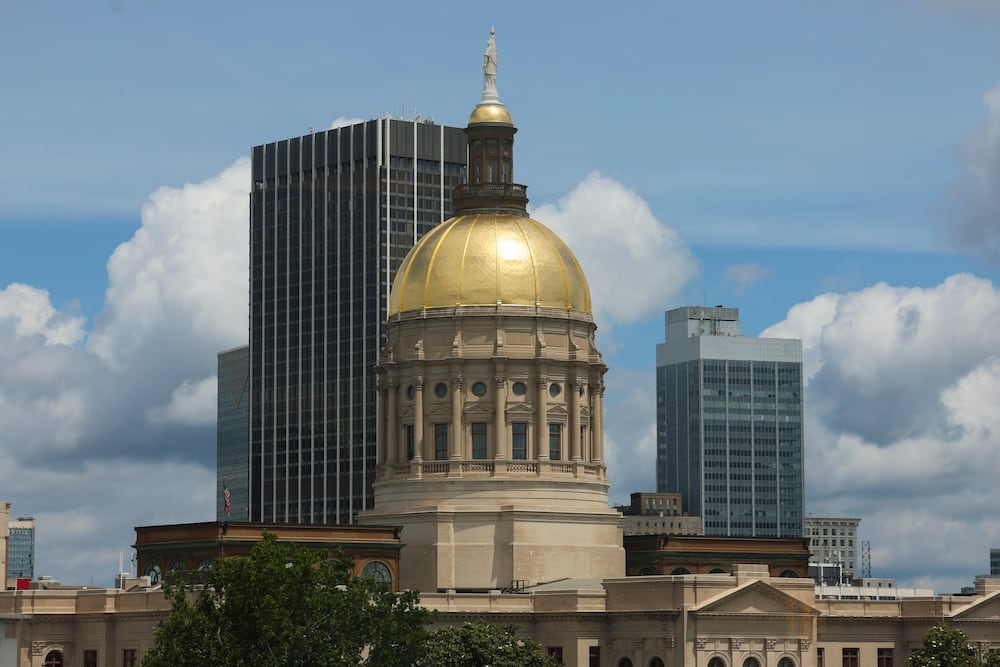
The Georgia state Capitol dome is shown through the windows of the Nathan Deal Judicial Center in June. (Jason Getz/AJC)
You know the one. It says the governor, lieutenant governor and a handful of other officials can bypass campaign contribution limits. Multiple candidates have challenged it, and multiple judges have ruled it is likely illegal.
But because the election always ends before the lawsuit does, judges end up dismissing these cases as moot. That happened this week with a case brought by Safe Affordable Georgia Inc., a political action committee that had supported Raffensperger’s bid for governor.
There’s still a chance the courts could issue a final decision on this law. The Green and Libertarian political parties have sued, and that case is still alive in federal court.
Split screen GOP
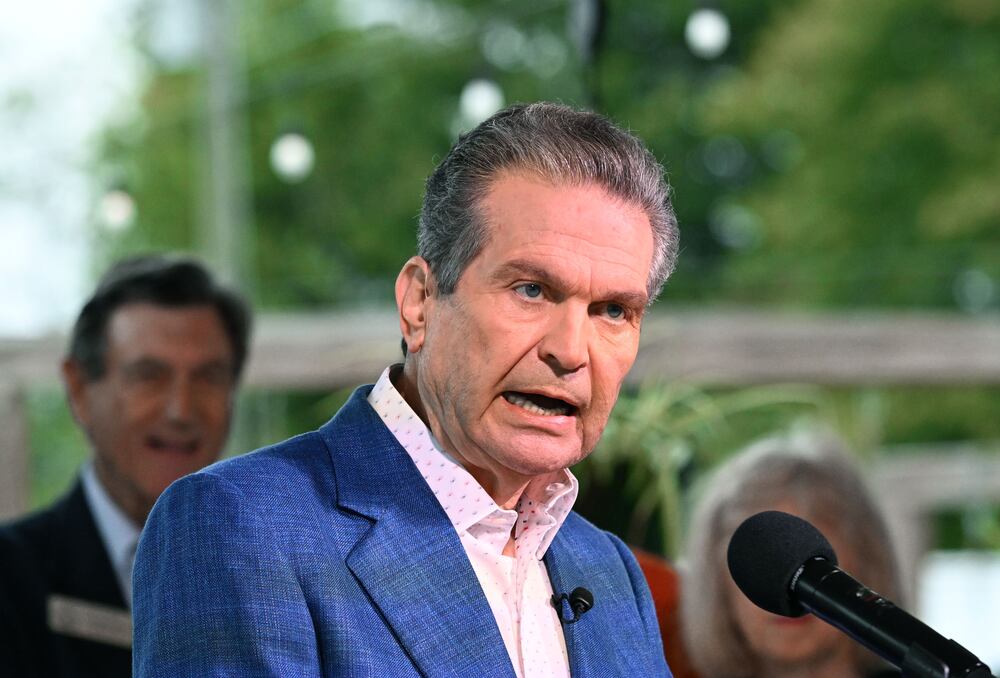
Republican nominee for governor Rick Jackson speaks to reporters during an event announcing his plan to support Georgia farmers at Cagle's Family Farm in Canton last month. (Hyosub Shin/AJC)
It’s been impossible to miss the tag-team effort between the top two Democrats on the ticket: nominee for governor Keisha Lance Bottoms and U.S. Sen. Jon Ossoff. The two appear together at joint rallies and talk each other up in their respective solo events.
But the opposite is playing out on the Republican side of the campaign. Rick Jackson, the GOP nominee for governor, and U.S. Rep. Mike Collins, the GOP nominee for U.S. Senate, are conducting separate campaigns in the final week leading up to Election Day, often with no mention of each other.
The schedules also mirror their separate strategies. Collins bets that the GOP base alone can send him to the Senate. Jackson’s team is making a play for the base along with moderate and independent voters to get him across the finish line.
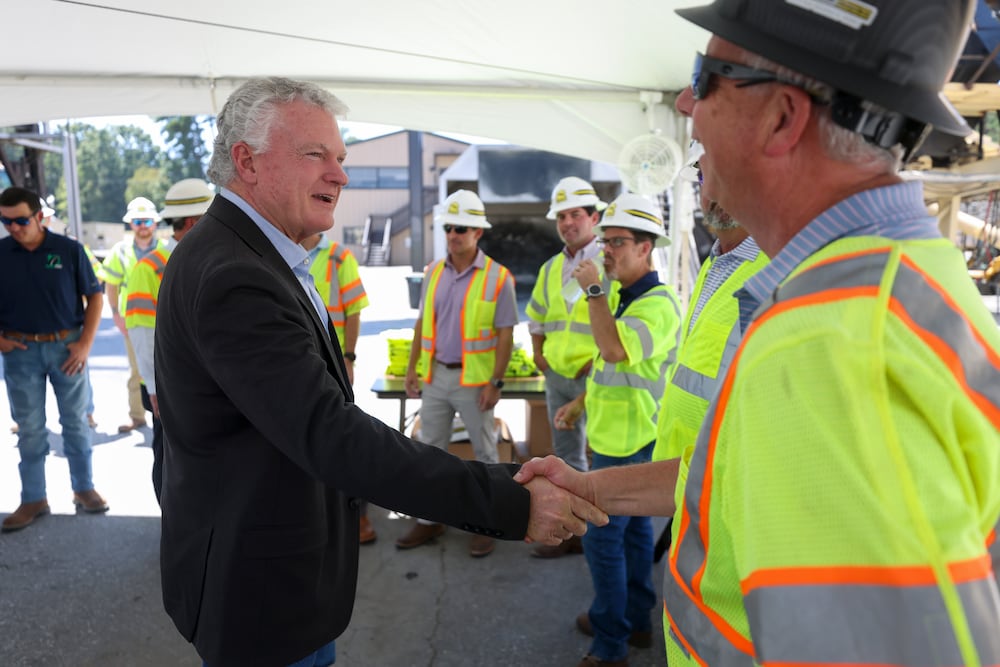
U.S. Rep. Mike Collins meets industry leaders as he tours an asphalt plant in Norcross in August. (Jason Getz/AJC)
As has been the case since the summer, Jackson and Collins stumped across Georgia separately Tuesday, with Collins blitzing rural areas and Jackson focusing on suburban metro Atlanta stops. And while Jackson had plenty of surrogates join him on the trail, Collins was mostly going it alone.
At his last stop of the day in Roswell, Jackson spoke after speeches from Gov. Brian Kemp and nearly the entire statewide GOP ticket, including state Sen. Greg Dolezal, the lieutenant governor nominee, state Sen. Brian Strickland, who is running for attorney general, Insurance Commissioner John King and Labor Commissioner Bárbara Rivera Holmes.
Not only was Collins not invited, but he was never mentioned from the stage all night. A source close to Jackson said only that the two men are running their own races. A spokesperson for Collins did not respond to a request for comment.
Advertisement
Truce
Then-state Sen. Nabilah Parkes, seen here posing for a portrait at the state Capitol in March 2023. (Natrice Miller/AJC)
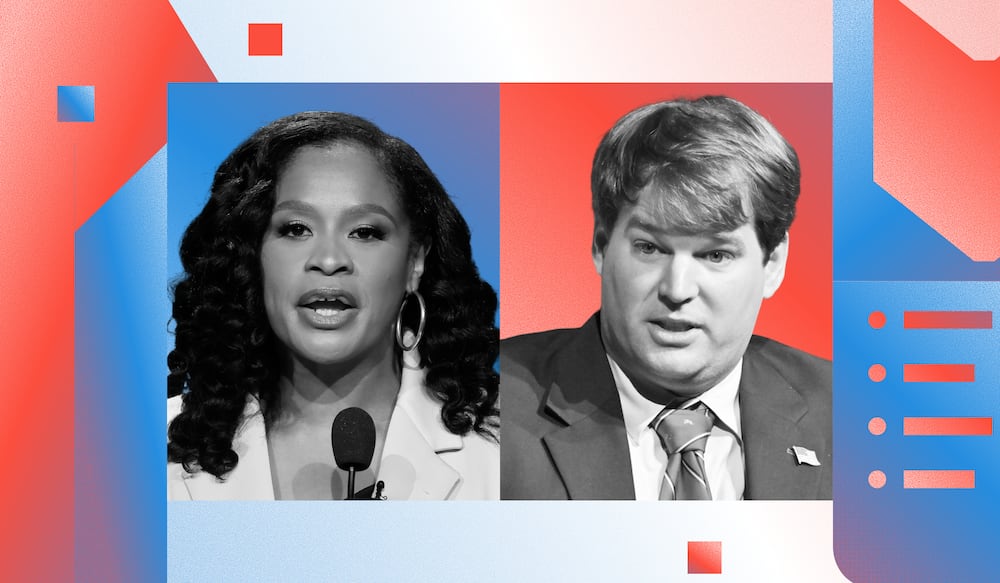
While another rift between Jackson and Lt. Gov. Burt Jones shows no signs of healing, the losing candidate from one of this year’s most bruising Democratic primaries was back on stage this week making the case for the entire Democratic ticket, including her former opponent.
Former state Sen. Nabilah Parkes, who ran for lieutenant governor, spoke at an Asian American and Pacific Islander get-out-the-vote event for Democrats on Monday night. She urged the crowd of about 300 to vote for Democrats up and down the ballot, including her former rival in the lieutenant governor primary, state Sen. Josh McLaurin.
“I’m 36 years old, and ever since Republicans have taken back power, this is the first time that I have seen us get so close to being able to flip these seats,” Parkes said. “As long as we come out … we will make sure that we will cross that bridge and send Mayor Bottoms to become the first Democratic governor since I was 12 years old and make Josh McLaurin lieutenant governor.”
After ticking through the entire Democratic slate down to Public Service Commission, Parkes concluded, “It’s not just Jon Ossoff and Keisha Lance Bottoms. We just keep bubbling all the way down.”
Surrogates on the trail
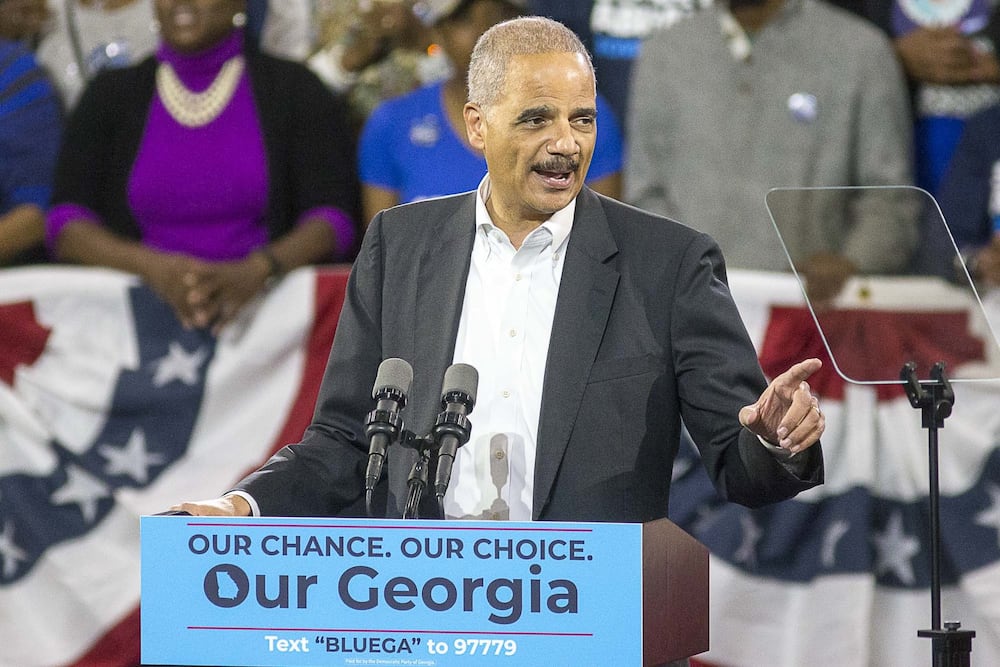
Former U.S. Attorney General Eric Holder speaks during a November 2018 rally for then-Democratic nominee for governor Stacey Abrams inside Forbes Arena at Morehouse College. (Alyssa Pointer/AJC)
U.S. Sen. Adam Schiff, D-Calif., will canvass neighborhoods in South DeKalb and Woodstock today. Chris Harden, the Democratic nominee in Georgia’s 11th Congressional District, will join Schiff in Woodstock.
Meanwhile, former U.S. Attorney General Eric Holder will knocking on doors in Jonesboro today.
Another surrogate who has been quietly making the rounds is homegrown: former Democratic nominee for governor Stacey Abrams. On Tuesday night, she spoke at an event hosted by the AAPI Victory Fund, a political committee focused on boosting political participation among Asian Americans, Native Hawaiians and Pacific Islanders.
Listen up
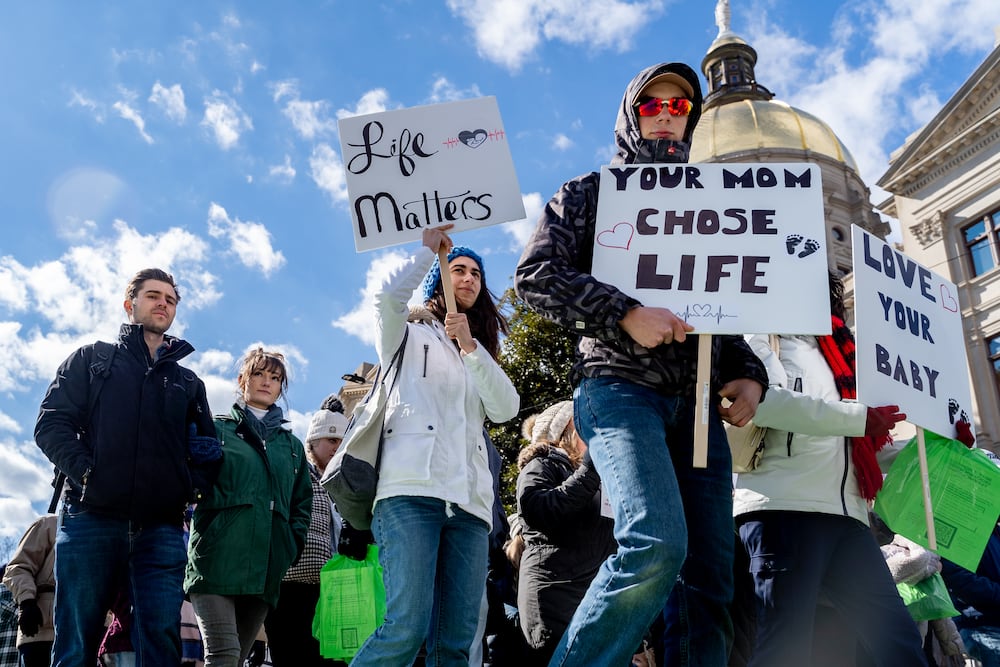
Georgia Right To Life held a silent march in the streets of downtown Atlanta in January last year. (Ben Hendren for the AJC)
Today on the “Politically Georgia” podcast, it’s the final installment of Georgia’s Choice, our weekly series on the issues and candidates on the 2026 ballot. Bluestein and Patricia Murphy examine why culture war issues have taken a back seat to affordability in Georgia’s 2026 elections. They break down Collins’ evolving position on abortion exceptions, as well as the competing approaches to abortion and gun laws in the governor’s race.
You can listen and subscribe to “Politically Georgia” for free on Apple Podcasts, YouTube or wherever you get your podcasts.
Have a question or comment for the show? Email us at politicallygeorgia@ajc.com or give us a call at 770-810-5297 and you could be featured on a future episode.
Advertisement
To Cook’s defense
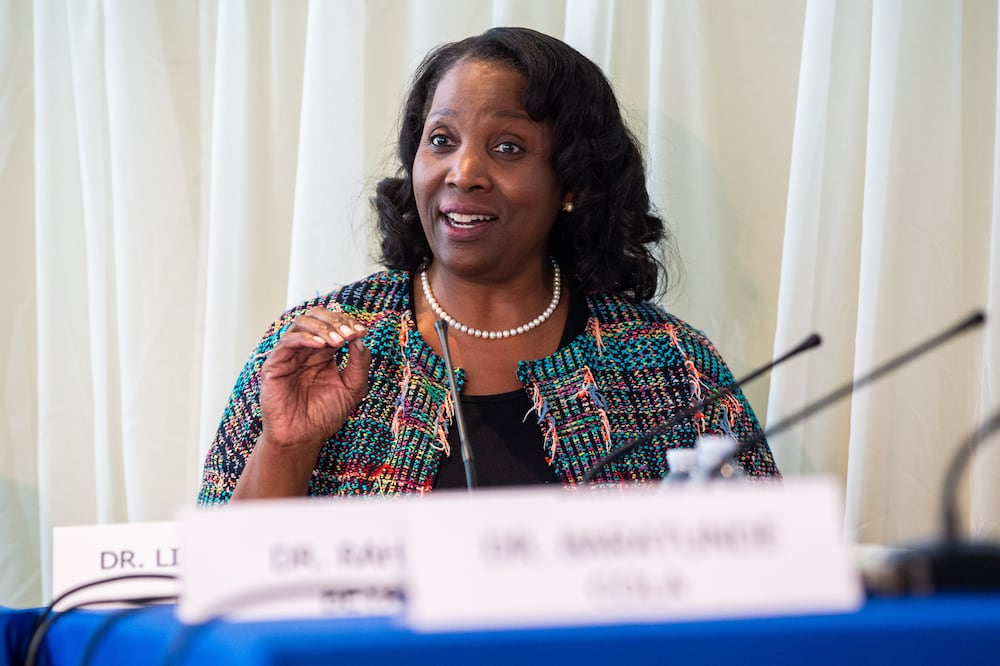
Lisa Cook, a Spelman alumna, was appointed to the Federal Reserve Board of Governors by then-President Joe Biden in 2022. (Bita Honarvar/AJC)
Led by U.S. Rep. Nikema Williams, 11 House Democrats sent a letter to President Donald Trump this week condemning his latest attempt to justify firing Lisa Cook.
Cook is a Georgia native, Spelman College alumna and the first Black woman on the board of the Federal Reserve. And Trump has had it out from her from day 1. He tried to justify firing her after accusing her of committing mortgage fraud. But the Supreme Court ruled that she hadn’t received due process.
More recently, Trump said he was forming a “committee of inquiry” as a first step to try again to dismiss Cook. The letter from Williams and the others said Trump’s committee is indicative of a rigged process with a preconceived outcome.
“This sham committee demonstrates your effort to fire Governor Cook at any cost, without legitimate cause,” they write. “There is nothing impartial about that, and no one is fooled.”
Today in Washington
Trump will meet with the Artemis III crew at the White House then travel to Chillicothe, Ohio, where he will speak at a campaign rally.
The House and Senate are out until after the midterm election.
Federal Reserve Chair Kevin Warsh will hold a news conference on interest rates.
Shoutouts
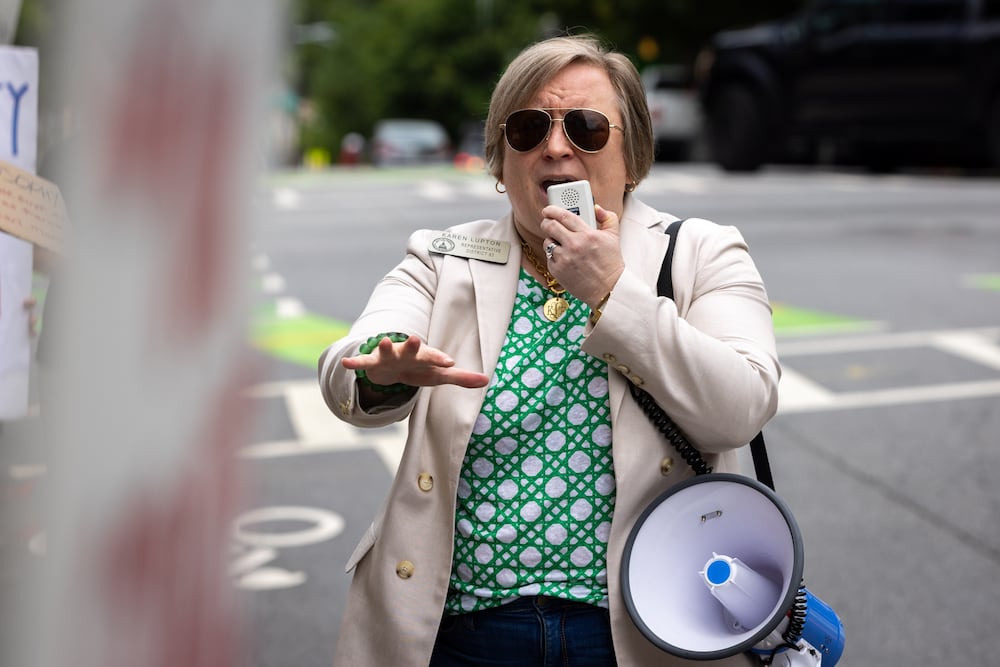
Georgia state Rep. Karen Lupton, D-Chamblee, seen here at a rally outside the University System of Georgia building in Atlanta in 2025. (Arvin Temkar/AJC)
Today’s birthdays
State Rep. Karen Lupton, D-Chamblee.
Riley Bunch, politics and government reporter for The Atlanta Journal-Constitution.
Want a birthday shoutout in the Politically Georgia newsletter? There’s a form for that. It’s not just birthdays. We’re also interested in new jobs, engagements, birth announcements, etc.
Before you go
After announcing at a news conference in Savannah that DaimlerChrysler had agreed to a site in Pooler for its new $754 million van plant, then-Democratic Gov. Roy Barnes took advantage of the situation to film a political ad with the Sprinter van in 2002. The factory was never built. (AJC FILE)
If a Sprinter van plant near Savannah hadn’t fallen through in the early 2000s, the state might not have purchased the site for Audi’s first U.S. factory.
The Politically Georgia team starts your day with insights and analysis from Peachtree Street to Pennsylvania Avenue. If you do not want this newsletter, unsubscribe here.